Centre-line radius 3 × D | 2" – 48" | Any angle to 180°
A 3D pipe bend has a centre-line radius three times the nominal pipe diameter: a 10" 3D bend has a radius of about 30" (762 mm). It is the tightest long-radius bend in common use, so it saves space against a 5D bend while giving far lower pressure drop and turbulence than a 1.5D elbow. We supply 3D bends by hot induction bending, with straight tangents at each end, in carbon, low-temperature, CrMo, stainless, duplex and nickel alloy grades.
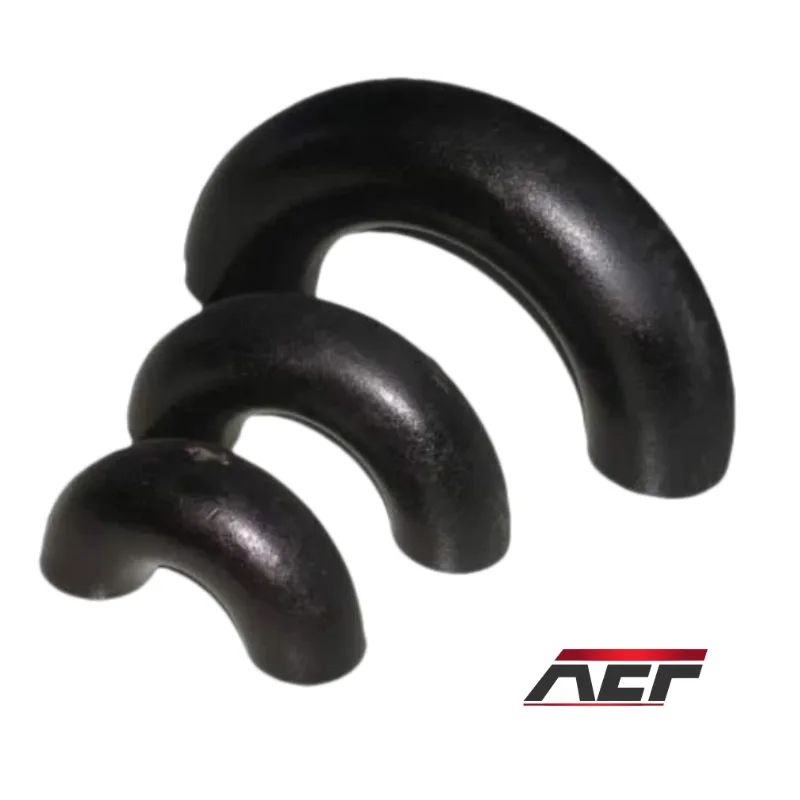
| Radius | 3 × D (centre line) |
| Size | 2" – 48" NPS |
| Wall | SCH 20 – XXS, or wall in mm |
| Angle | Any, up to 180° |
| Method | Hot induction bending |
| Tangents | As specified |
| Codes | ASME B16.49, ISO 15590-1 / EN 14870-1, project spec |
| Documents | EN 10204 3.1 std, 3.2 on request |
“3D” describes the bend radius, not the shape: the radius of the centre line is three times the pipe diameter. Most specifications take D as the nominal pipe size, but some use the outside diameter. For a 10" bend that is the difference between 762 mm (3 × 254 mm) and 819 mm (3 × 273.1 mm OD) radius, so please state which one your specification uses.
A 3D bend is made from a length of straight pipe. The pipe is heated in a narrow band by an induction coil and pushed through the bender, so the arc is formed progressively. The straight ends, called tangents, stay unheated and can be cut to the length you need for welding and inspection.
Compared with a standard 1.5D long-radius elbow, a 3D bend has a gentler change of direction. That gives lower pressure loss, less erosion at the extrados in slurry or high-velocity gas service, and it can be piggable if the ovality and wall are controlled for it.
| Item | 1.5D LR elbow | 3D bend | 5D bend |
|---|---|---|---|
| Centre-line radius (10" line) | ≈ 381 mm | ≈ 762 mm | ≈ 1,270 mm |
| Made from | Hot-formed fitting, ASME B16.9 / EN 10253 | Induction-bent pipe | Induction-bent pipe |
| Tangent ends | No | Yes, to order | Yes, to order |
| Pigging | Usually not piggable | Piggable if specified (check your pig) | Usual choice for intelligent pigs |
| Space needed | Least | Medium | Most |
| Typical use | Plant and station piping | Station piping, compact routing, slurry lines | Pipelines, pig traps, launcher/receiver areas |
API 5L Gr B, X42–X70 (PSL2), ASTM A106 Gr B, A333 Gr 6, EN P235GH / P265GH, L360NB / L415
304L, 316L (1.4404), 321, 316Ti, duplex 2205 (1.4462), super duplex 2507
Alloy 625, 825, C-276 and others on enquiry
It means the centre-line bend radius is three times the pipe diameter. A 12" 3D bend has a radius of about 36" (914 mm). Most specifications use the nominal pipe size for D, but some use the outside diameter, so state which one applies.
A 3D bend can be piggable if the radius suits the pig and the ovality and wall are controlled to the piggable limits. Many intelligent (inspection) pigs need 3D or larger; some operators require 5D. Check the minimum bend radius with your pig supplier and state it in the RFQ.
A long radius elbow to ASME B16.9 or EN 10253 has a radius of 1.5D and no straight ends. A 3D bend has twice that radius, is made by bending a length of pipe, and normally has straight tangents at each end. The bend gives lower pressure drop and less turbulence but needs more space.
ASME B16.49 covers factory-made wrought induction bends for transportation and distribution systems. ISO 15590-1 (EN 14870-1 in Europe) covers induction bends for petroleum and natural gas pipelines. Process and power piping bends are usually ordered to the project specification under ASME B31.3, B31.1 or EN 13480.
Size, minimum wall after bending, material grade, bend angle, tangent lengths, quantity, the bending code, whether it must be piggable, end preparation and the inspection certificate (3.1 or 3.2). A drawing or isometric extract helps.
Reply from our Mumbai sales office, usually within one working day. You can attach drawings by email to marketing@arshyafittings.com.